

The QA platform major projects standardise on.
Built for civil work, governed across every business unit, and open to the systems the rest of your business runs. The QA record, produced once and used everywhere it is owed.






What a major project needs from a QA platform
Structured for civil.
Built for civil, developed with the contractors running the work. Lots, ITPs, checklists, Hold Points, NCRs, Test and Survey Requests, contract notices and Conformance Reports, in the sequence the work happens.
Scales with the project.
Years of work and tens of thousands of records in one database, still searchable and reportable at handover. Across every project running at once.
One standard, everywhere.
Your ITPs and workflows deployed to every job. Roles and permissions decide who can sign what, and Hold Points stop the work until the right person releases it.
Traceable to the person.
Every approval, review and test result carries a name and a timestamp. Audits, contested claims and defects years on are answered from the record, not reconstructed from inboxes.
Open by API.
Structured data, not a pile of documents. Power BI, Fabric and your own reporting read it through the same API the application runs on, so company KPIs show the live position rather than last month's export.
Built to pass IT.
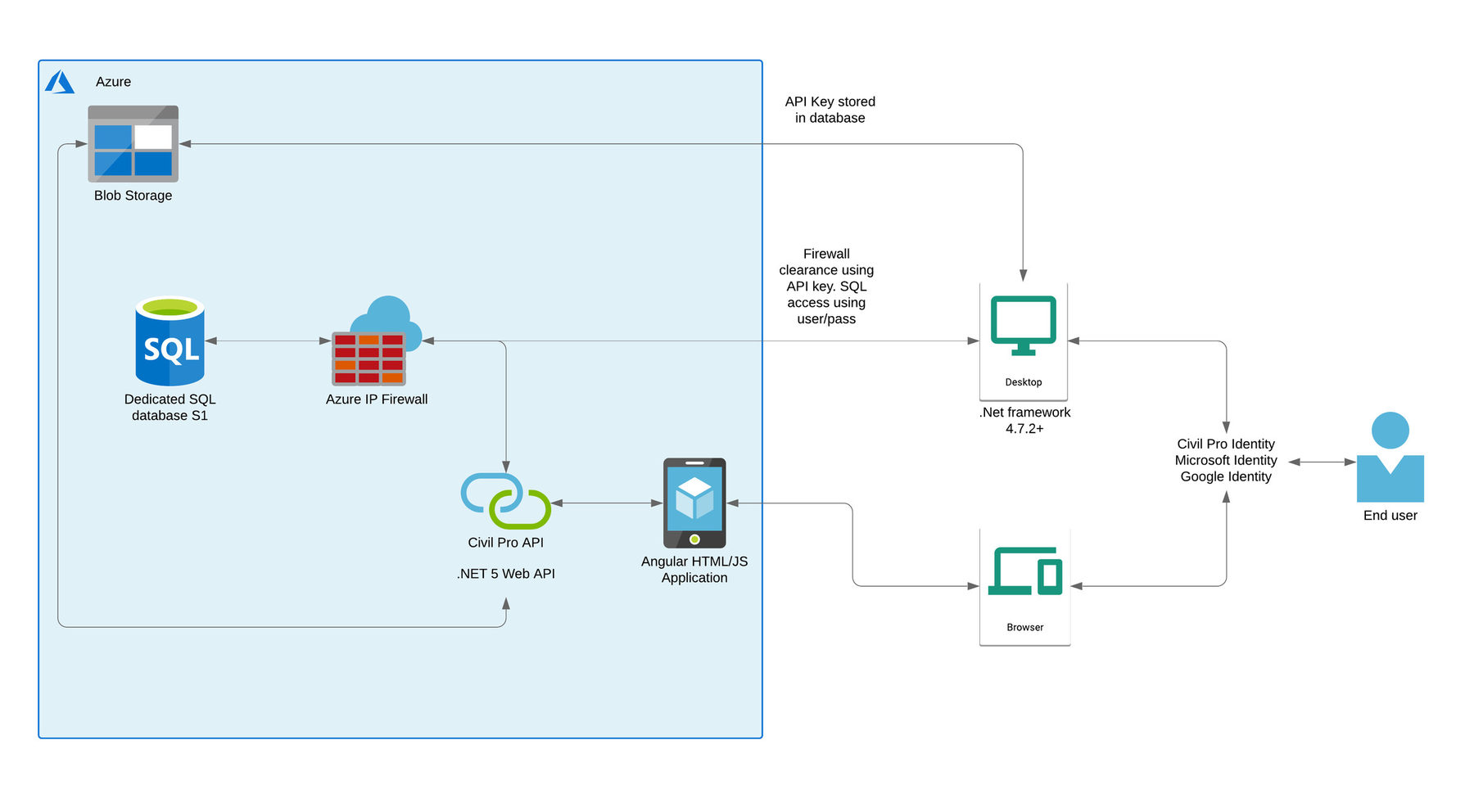
Your own single-tenant Azure database, hosted in Australia, with SSO and public API documentation. Deployed on government and defence work.
Located, not just recorded.
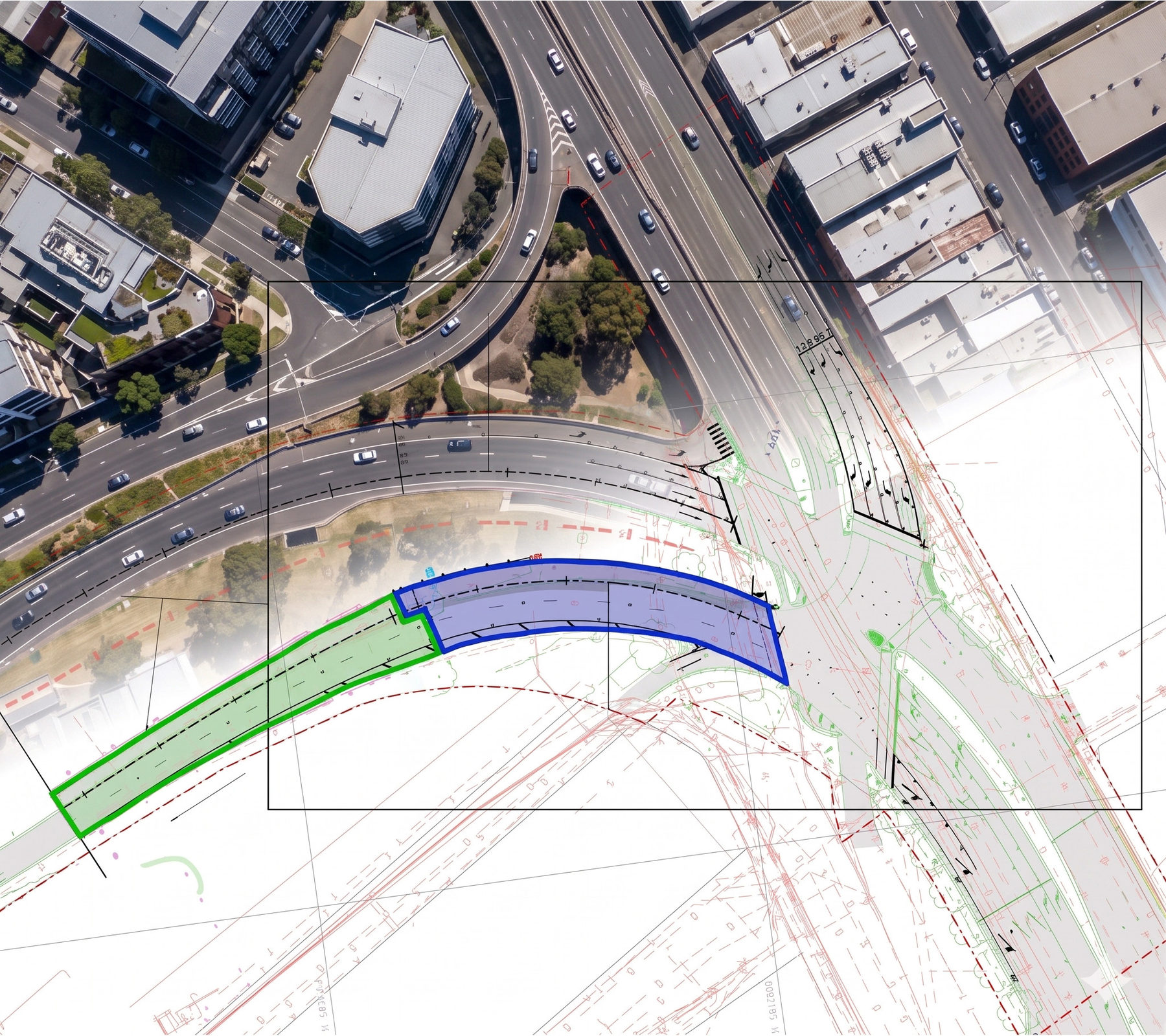
Drawings are spatially registered, so marking a Lot on these drawings gives it a local coordinate definition. Lots and the QA attached to them are searchable by location, not just by a Lot number.
Lands where it's mandated.
Aconex and Teambinder fed automatically, or the Client's own systems through the API. Produced once, delivered wherever the contract says it goes.
From the people who run quality at that scale
"CivilPro has enabled real-time collaboration among all stakeholders — Client Representatives, Contract Administrators, Testing Agencies, and Surveyors. This has streamlined the entire quality cycle and reduced administrative tasks across BMD's diversified portfolio."
"For Fulton Hogan, CivilPro is an essential element to a successfully delivered infrastructure project — from scalable interfaces for all project stakeholders to bespoke tools for the nuances of complex civil work."
Everyone on the job, in the one database
The people producing your QA evidence mostly don't work for you. Subcontractors, testing agencies, surveyors and Client representatives all work in the same database as your engineers.
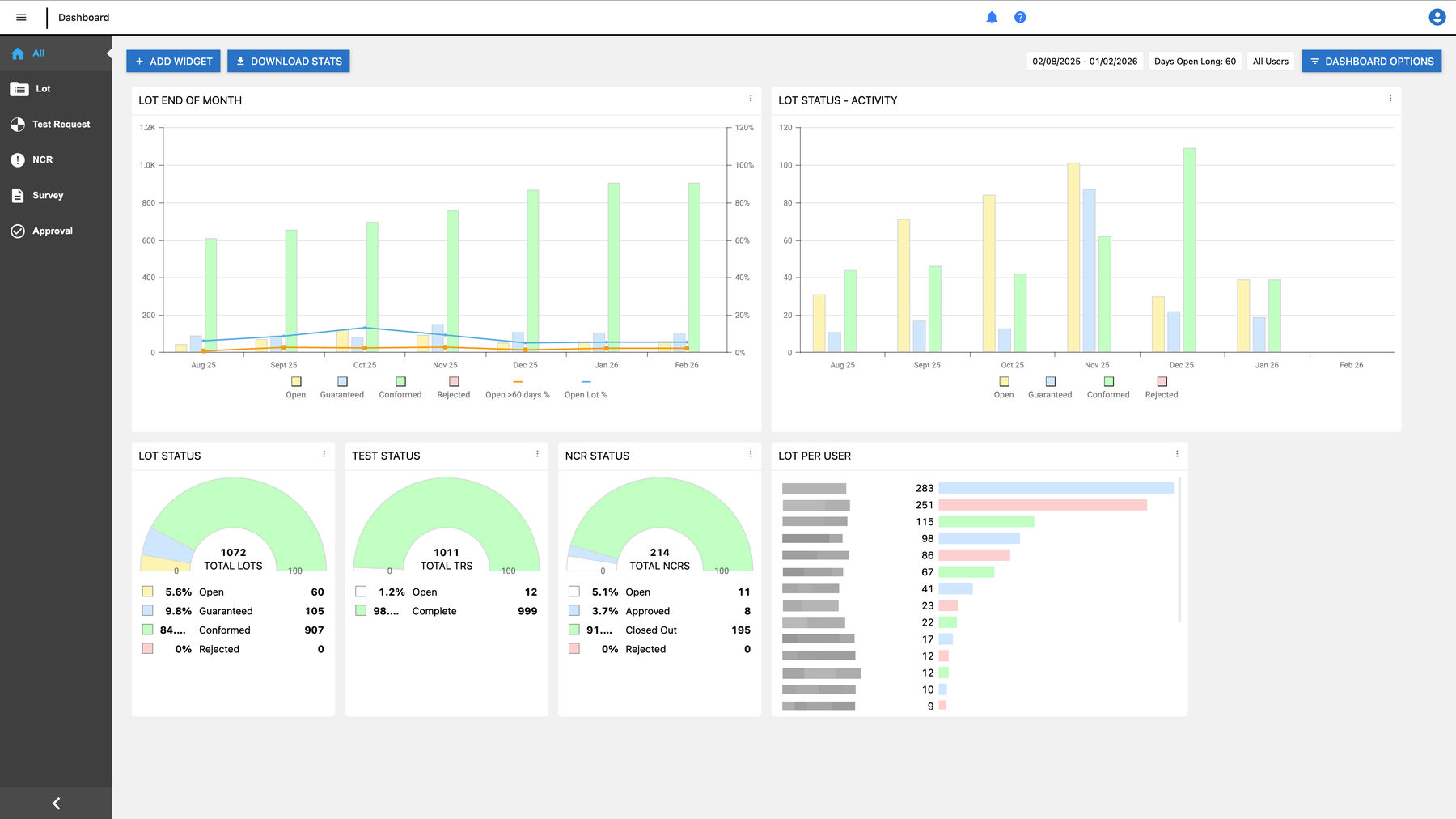
- Client Representatives approve Hold Points in-app, trail kept
- Subcontractors and Inspectors record against your Lots
- Testing agencies return results against the Test Request
- Joint ventures get a ringfenced database, or share seats
- You pay for your own staff. Everyone else is free.
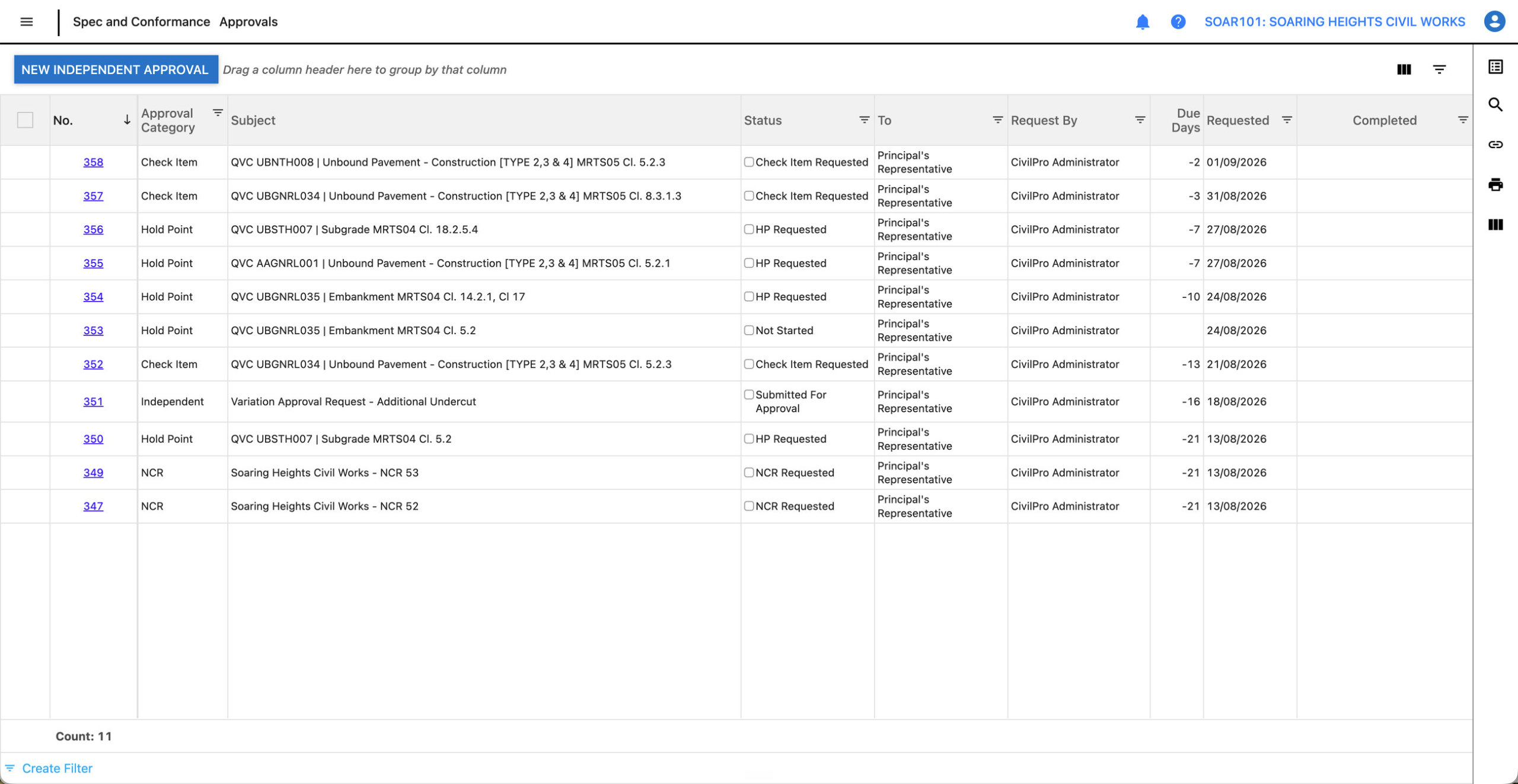
Handover, before the team demobilises
QA packs are usually rebuilt months after practical completion, by people piecing together email and shared drives long after the crew that did the work has gone. That tail is long, expensive, and rarely budgeted for.
In CivilPro the record is the pack. It builds as the job is built.
- Conformance Reports compiled the moment they're required
- Bulk export across a whole Area, Work Type or project
- Gaps visible while the crew is still on site
- The pack your Client receives is the record your team worked in
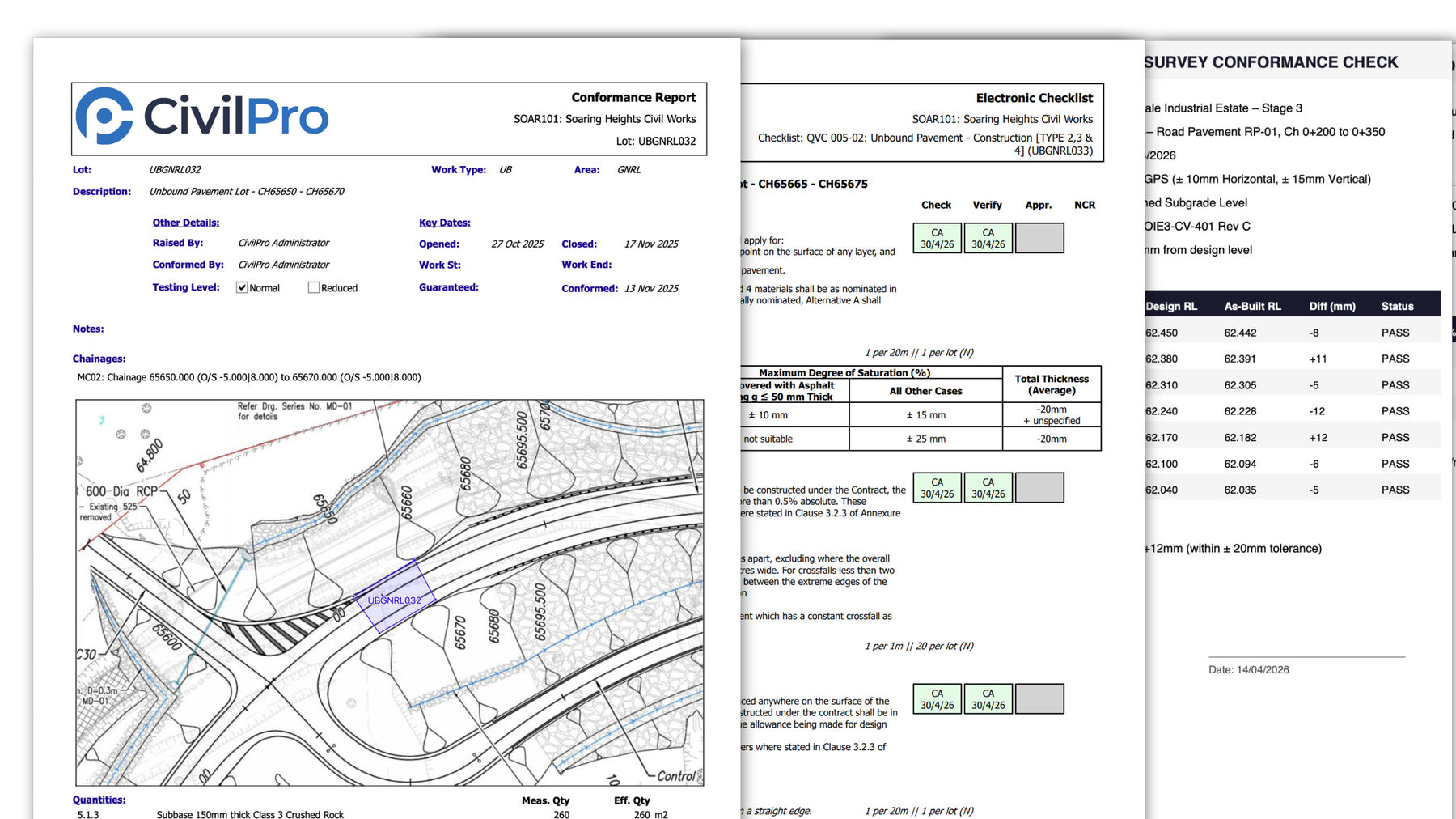
Visibility across the portfolio
Lot status, test status and NCR status across every project, live. Management sees the position without asking site for a spreadsheet.
- Lot, test and NCR status at a glance
- Filter by project, user or date range
- Export for board and client reporting
Ready for the question you haven't asked yet
Standardising on a platform is a five-year decision. What matters as much as what it does today is the shape the record is in when the business wants something new from it.
Read alongside everything else
Once QA is structured rather than filed, it can sit beside cost, programme, machine control and asset data. Conformance against production. Rework by crew, subcontractor or material. Test failure rates by supplier.
Reported on, not exported
Power BI and Fabric connect straight to the API, project-scoped, with filtering and aggregation server-side. Board and Client reporting reads the live position.
Spatial by default
Because coordinates come with the Lot rather than being bolted on afterwards, progress can be validated against approved work extents and conformance reported by alignment.
Security your IT team will ask about
- Single-tenant: your corporate account has its own dedicated Azure database and file storage
- Hosted in Australia for Australian clients
- SSO via Azure Active Directory, 2FA for everyone else
- Fully configurable roles and permissions
- Used on government projects, including defence
Why not build it in-house?
"There's significant risk in trying to develop custom solutions in a fast-paced, live environment. CivilPro offers an off-the-shelf solution that's ready to go and reduces that risk."
— Dennis Gascoigne, CivilPro founder. Because CivilPro develops for a broad client base, advanced capabilities – geospatial tools, approval workflows, integrations – are funded across the industry rather than carried by one contractor's IT budget.
And when it doesn't do something you need
Feature requests from customers go to the people who write the code, not into a portal. A good part of what CivilPro does now started as a specific requirement on a specific job – including integrations built alongside a state road authority. Standardising on the platform buys you a say in where it goes.
What happens to what you already have
Most majors are carrying years of QA in a home-grown system, a SharePoint or a shared drive. Template libraries, project structures and historical records are migrated as part of setup, so the switch doesn't start with an empty database.
How major contractors start
Discovery
30–60 minutes scoped to your vertical – roads, bridges, rail, defence or mining infrastructure.
Proof of Concept
A scoped 6-month PoC – typically 10 seats and a defined project – with success criteria agreed up front.
Rollout
Enterprise deployment across business units, with training, template migration and integration setup.
Explore further
Talk to us about a rollout
Enterprise pricing and PoC scoping – no configurators, no forms that go nowhere.
